Master Beekeeper Program

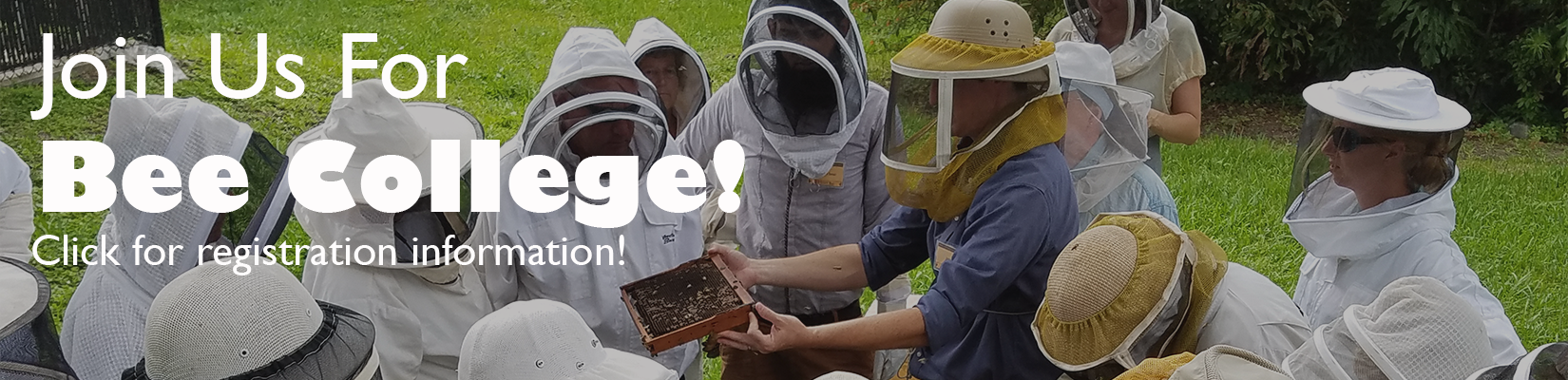
The next Master Beekeeper training & exams will be held Thursday March 8, 2012, the day before Bee College.

Please click on the image below for a full PDF flyer.

What's the difference between the Master Beekeeper Program and the Bee College?

Entry into the program is attained by meeting the minimum requirements for Apprentice Level and passing the Apprentice examinations on exam day.

Registration

Registration is now open. Please click here for a printable registration form. This is a completely separate event from the Bee College and requires separate registration.

For Master Beekeepers

If you are already enrolled in the Master Beekeeper Program, we now have a private online social group. If you have not yet recieved an invitation to join please contact us.

The MPB board has just approved two new majors. The Program and Requirements Document has been updated to include these additions as well as clarify some credit requirements.

This Just In: Cover sheets for the Master and Master Craftsman Levels to accompany documentation materials to be handed in on exam day. These cover sheets should help keep your PSC's, core credits, and major credits clear and organized.

Master Beekeeper of the Year Awards

University of Florida Master Beekeeper Program
Notification of Application for Award recognition for:
1) 2011 Apprentice Beekeeper of the Year Award
(will be awarded to the Apprentice that has worked most diligently towards achieving Advanced  Level)
2) 2011 Advanced Beekeeper of the Year Award
2) 2011 Master Beekeeper of the year
Eligibility:

  • Time frame eligible: January 1, 2011 – Dec 31, 2011
  • Must have held respective rank during majority of that calendar year.

For example:

    • If you tested and advanced to the Advanced Beekeeper level in March of 2011, then you would apply for “Advanced Beekeeper of the Year”.
    • If you tested and advanced for the Master Beekeeper level in October of 2011, then you would apply for “Advanced Beekeeper of the Year” because you held the advanced level for the majority of the year.

Awards will be based on the following criteria:

  • Combined average scores on the written and practical examinations taken at respective level
  • Once your application is submitted to HBREL, we will report your scores to the MBP Board
  • Number of Public Service Credits(PSCs)  completed (more is better)
  • Exceeded necessary requirements to achieve ones respective level
  • The total number of people reached through PSCs and other required activities (such as Major and Core Credits, Research Project, and/or Extension Project)
  • Quality and impact of  PSCs and other required activities (such as Major and Core Credits, Research Project, and/or Extension Project)

-      Emphasis on publications, reproducible materials, program development, etc.  that can be used beyond their use for advancement in the UF Master Beekeeper Program.
To  Apply:

  • Please send your name, rank, major (if applicable), award level to jklopchin@ufl.edu with MBP AWARD in the subject line.
  • Please use the appropriate level cover sheets to outline your public service credits earned in the 2011 calendar year.  I suggest scanning them and sending them as an attachment, or mailing the hard copies.
  • IF your scores and PSC’s qualify you, I will be in touch to collect additional supporting documentation.
DO NOT send your actual PSC documentation to the lab until I contact you.


Program Information

The Master Beekeeper Program (MBP) is a five year beekeeper training and certification provided by the University of Florida. One must already be a beekeeper to enter the program (please see Apprentice requirements). Entry into the program is attained by meeting the Apprentice requirements and passing the Apprentice examinations on exam day. There is no age limit for entry into the program although the examination may be too difficult for children under 12 years of age. All students must enter the program at the Apprentice Beekeeper level and no students are permitted to skip levels.


The program offers four levels of training and advancement: Apprentice Beekeeper, Advanced Beekeeper, Master Beekeeper and Master Craftsman Beekeeper. All ranks take a minimum of 1 full year to complete with the exception of Master Level, which takes 2 years. Opportunities for advancement in the program occur on exam day, upon meeting all the requirements for the level of advancement desired.

Examinations are held twice a year and all dates are announced in our quarterly newsletter, the Melitto Files as well as on our website, www.UFhoneybee.com. Our spring examinations are held the Thursday before Bee College, during the University of Florida’s Spring Break (generally, this falls in the first 2 weeks of March). Our fall examinations are held the Thursday before the annual Florida State Beekeepers Association (FSBA) Meeting (generally the last two weeks of October).

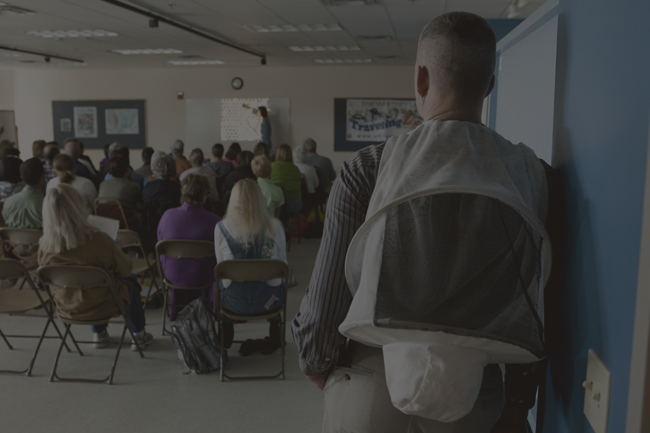
The training and examination day consists of 2 parts. In the morning (8am-12pm) we hold review lectures on important beekeeping topics and in the afternoon we hold the written and practical examinations (2pm-6pm). The exam days are when Advanced, Masters and Master Craftsman have their required documentation of public service work due in the MBP Board.

Additionally, we hold award ceremonies to congratulate all those who have passed the exam at that season’s respective conference; in spring we do this at the Bee College Awards Ceremony and in the fall we do this at the FSBA’s banquet dinner. These award ceremonies are not required, but are encouraged and do require separate registration from the MBP registration (information is always announced on www.UFhoneybee.com).

If at any point you wish to discontinue the program, please contact us directly. Please also be sure to keep us informed of your current mailing address, email address and phone number as we do use all methods to contact you for various reasons throughout your enrollment.

Below is a list of requirements necessary for a candidate to fulfill in order to achieve each level in the Master Beekeeper Program. It is important that candidates read the requirements closely and make certain that that all requirements are met in order to advance in the program.

  1. Apprentice Beekeeper
  2. Advanced Beekeeper
  3. Master Beekeeper
  4. Master Craftsman Beekeeper

Florida Master Beekeeper Program Board

  • Mr. Brad Burbaugh, Agricultural Extension Agent, UF/IFAS Extension, Duval County
  • Dr. Jamie Ellis, University of Florida, Assistant Professor of Entomology
  • Mr. Jerry Hayes, Assistant Chief, Apiary Inspection Section, Division of Plant Industry
  • Dr. Bill Kern, University of Florida, Associate Professor of Entomology
  • Mr. Ray Zerba, Horticulture Extension Agent, UF/IFAS Extension, Clay County

Public Service Credits

Candidates for Advanced Beekeeper should keep all Public Service Credit documentation forms together and bring them on the day of the Advanced Beekeeper exam. All Public Service Credit forms MUST be turned in to the Master Beekeeper Program Board on the day of exam.  Please do not send them to the lab in Gainesville. However, it is advisable to contact us with questions regarding credits, especially when they are not pre-approved. REMEMBER, adequate documentation of the event is key. The PSC forms should not be your only proof of each PSC.

Major Declaration

Once you have achieved Advanced Status and are moving towards Master you will need to choose and declare a major to the board. Please fill out this electronic document and submit. You may declare your major early. Please refer to the MBP document for full descriptions of majors.

Return to top

Master Beekeeper Program Levels

Apprentice Beekeeper
A: must be a Florida registered beekeeper or a registered beekeeper in home state (name must be on registration list or the name must “umbrella” an individual – ie. “Ellis Family” on the registration list would cover husband, wife, and children). Special exceptions to this rule will be considered.

B: must own at least 1 colony of honey bees for at least 1 year. Special exceptions to this rule will be considered.

C: must score a 70% or higher on a written examination. The written test can include but is not limited to materials covered during previous UF Bee College lectures and labs, on the FDACS-DPI Apiary website , on the UF Honey Bee Research and Extension Laboratory website, Melitto File Articles, and books/other literature on the Apprentice Beekeeper reading list (see Appendix E).

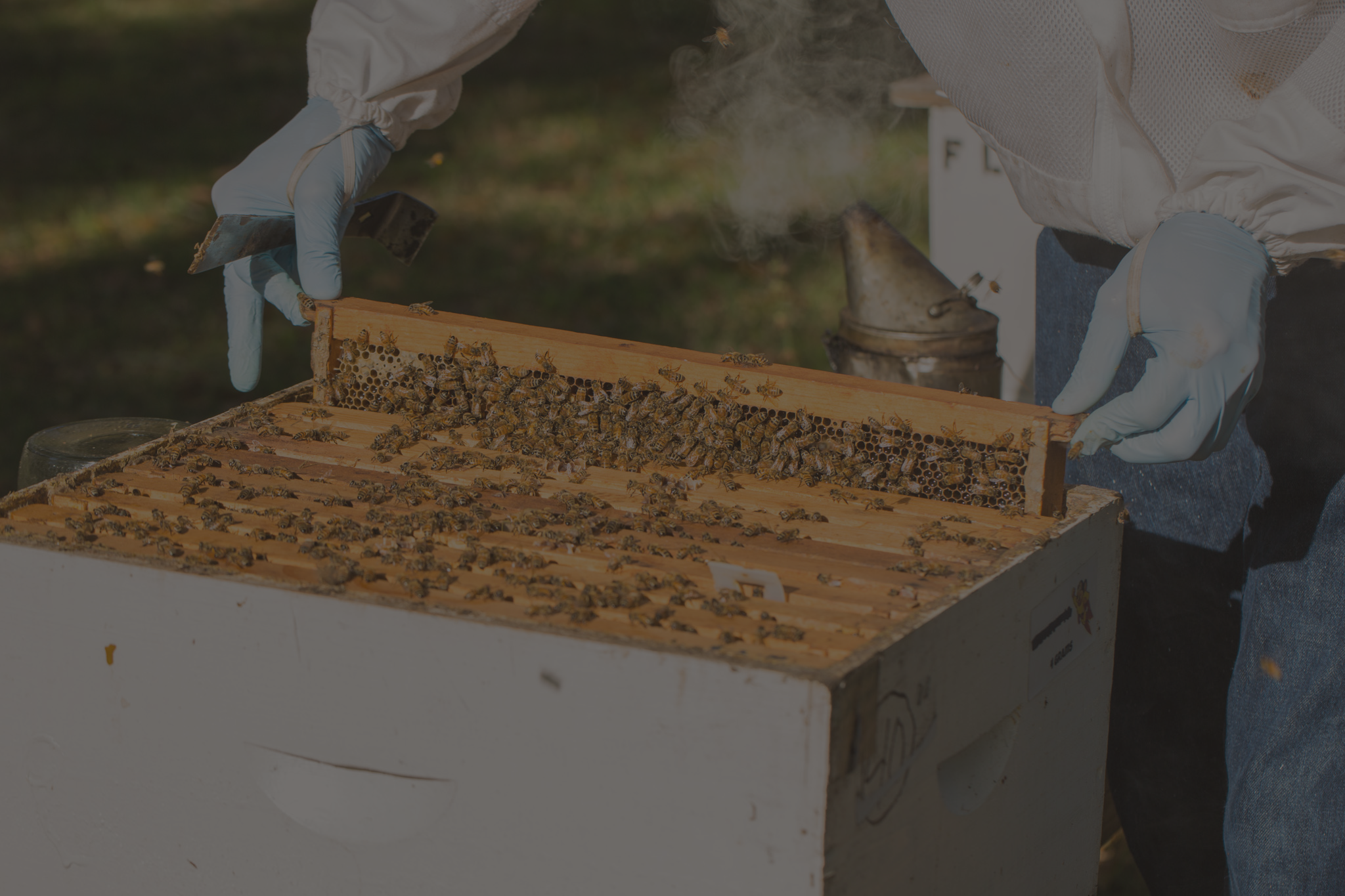
D: must score 70% or higher on a practical examination. The practical examination can include but is not limited to being able to describe the physical parts of a beehive (common terms, not regional nomenclature); light and properly use a smoker; recognize the various stages of brood, different castes of bees, and find or at least describe the queen; differentiate between brood, pollen, capped honey; recognize propolis and describe its functions; describe the layout of a brood nest (placement of honey, pollen, and brood), etc.

Return to top

Advanced Beekeeper
A: must have held the Apprentice Beekeeper rank at least 1 year and have been a practicing beekeeper for at least 2 years. Also, must be a Florida registered beekeeper or a registered beekeeper in home state. Special exceptions to this rule will be considered.

B: must show proof of passing 6 computerized honey bee training modules (must score 80% or higher on each module). These will be available at participating county extension offices throughout Florida, online (at ufhoneybee.com), or by request to the UF Honey Bee Research and Extension Laboratory. They will include modules on (1) African honey bees, (2) Pesticides (3) Pests and Diseases, (4) Pollination, (5) Honey Judging, and (6) Social wasps and bees.

C: must score a 70% or higher on a written examination. The written test can include but is not limited to materials covered during previous UF Bee College lectures and labs, on the FDACS-DPI Apiary website, on the UF Honey Bee Research and Extension Laboratory website (ufhoneybee.com), and books/other literature on the Advanced Beekeeper reading list (see Appendix E). This examination will cover more information than that required at the Apprentice Beekeeper level. The testable material will closely adhere to information taught in the computerized honey bee training modules (“B” above).

D: must score 70% or higher on a practical examination. The practical examination can include but is not limited to: identifying pests, parasites and pathogens; reading pesticide labels and determining which is the safest to use around bees; identifying several beekeeping items; examining honey labels for errors; distinguishing between bees, wasps, hornets, etc.; and identifying anatomical structures of a bee, flower, etc.

E: must perform and be able to document participation in 5 public service credits (see Appendix A)

Return to top

Master Beekeeper
A: must have held the Apprentice and Advanced Beekeeper ranks 1 year each and have been a practicing beekeeper for at least 3 years. Also, must be a Florida registered beekeeper or a registered beekeeper in home state. Special exceptions to this rule will be considered.

B: must demonstrate/document 10 additional public service credits beyond that required for the Advanced Beekeeper level (see Appendix A).

C: choose and declare major (see Appendix C) and demonstrate/document expertise in 3 of 10 subcategories within the major. We refer to these as “major credits”.

D: must document completion of 5 of 18 credits OUTSIDE the chosen major (see Appendix B). We refer to these as “core credits”. 

E: must score 70% or higher on a written examination. The written examination can include but is not limited to materials covered during previous UF Bee College lectures and labs, on the FDACS-DPI Apiary website, on the UF Honey Bee Research and Extension Laboratory website, and books/other literature on the Master Beekeeper reading list.

Resources: Master Level Cover Sheet

Major Declaration Form

Return to top

Master Craftsman Beekeeper
A: must have held the Master Beekeeper rank at least 2 years and have been a beekeeper at least 5 years. Also, must be a Florida registered beekeeper or a registered beekeeper in home state. Special exceptions to this rule will be considered.

B: must have 15 units of public service work beyond that required for a Master Beekeeper (see Appendix A). “Extra” public service credits obtained while certifying for the Master Beekeeper Level cannot be applied to the
15 total public service credits needed to achieve Master Craftsman Status.

C: must satisfy 5 additional new credits toward your declared major (for a total of 8 credits toward major – 3
credits were completed in the Master Beekeeper level). We refer to these as “major credits”. If student changes
major, he/she must re‐declare new major with the MBP board or advisors, and still satisfy 8 total credits toward
new major unless previously acquired credits overlap with new major.

D: must demonstrate expertise in 8 additional new credits outside your major (for a total of 13 credits outside
major – 5 credits were completed in the Master Beekeeper level). We refer to these as “core credits”. Firstly,
these credits can be chosen from Appendix B. In addition to this, you may choose credits from other majors to
fulfill your core credits.

E: must demonstrate communication skills (see Appendix D)

F: must pass an oral examination. Nominee is tested by at least three individuals on the review board. The candidate is tested on one specific area of his or her choice (major) as well as on general knowledge of those areas related to honey bees and beekeeping.

G: must participate substantially in a UF (or other university), FDACS-DPI, or USDA sponsored research or extension project

Resources: Master CraftsmanLevel Cover Sheet

Return to top

Reading Lists

Apprentice Beekeeper Reading List
Tthe following materials are suggesting reading for preparation for the Apprentice Beekeeper examinations:

Books
1) Honey Bees and Beekeeping: A Year in the Life of an Apiary, 3rd Edition – Keith Delaplane (2007)
2) The Beekeeper’s Handbook, 3rd Edition – Diana Sammataro and Alphonse Avitabile (2006)
3) First Lessons in Beekeeping – Keith Delaplane (2007)
4) Backyard Beekeeping, Weeks Ringle – Kim Flottum (2005)
5) Honey Bee Biology and Beekeeping – Dewey Caron (2000)

Periodicals
1) American Bee Journal
2) Bee Culture

Return to top 

Advanced Beekeeper Reading List (in addition to those listed for the Apprentice Level Examination)
Tthe following materials are suggesting reading for preparation for the Advanced Beekeeper examinations:

Books
1) The Hive and the Honey Bee – Dadant and Sons, Inc. (1992)
2) ABC & XYZ of Bee Culture – A.I. Root, (2007)
3) Honey Bee Pests, Predators, and Diseases, 3rd Edition – A.I. Root (Morse and Flottum, eds.) (1998)
4) The Biology of the Honey Bee – Mark Winston (1991)
5) Crop Pollination by Bees – Keith Delaplane and Daniel Mayer (2000)

Websites
1) All “honey bee” entries (search for “honey bee”) at: http://edis.ifas.ufl.edu/
2) Honey Bee Research and Extension Laboratory website: UFhoneybee.com
3) Florida Department of Agriculture and Consumer Services – Division of Plan Industry, Apiary Section Website: http://www.doacs.state.fl.us/pi/plantinsp/apiary/apiary.html

Modules

The modules required to attain the Advanced Beekeeper level in the Florida Master Beekeeper Program are now online.
Click here for Modules...
 

Return to top